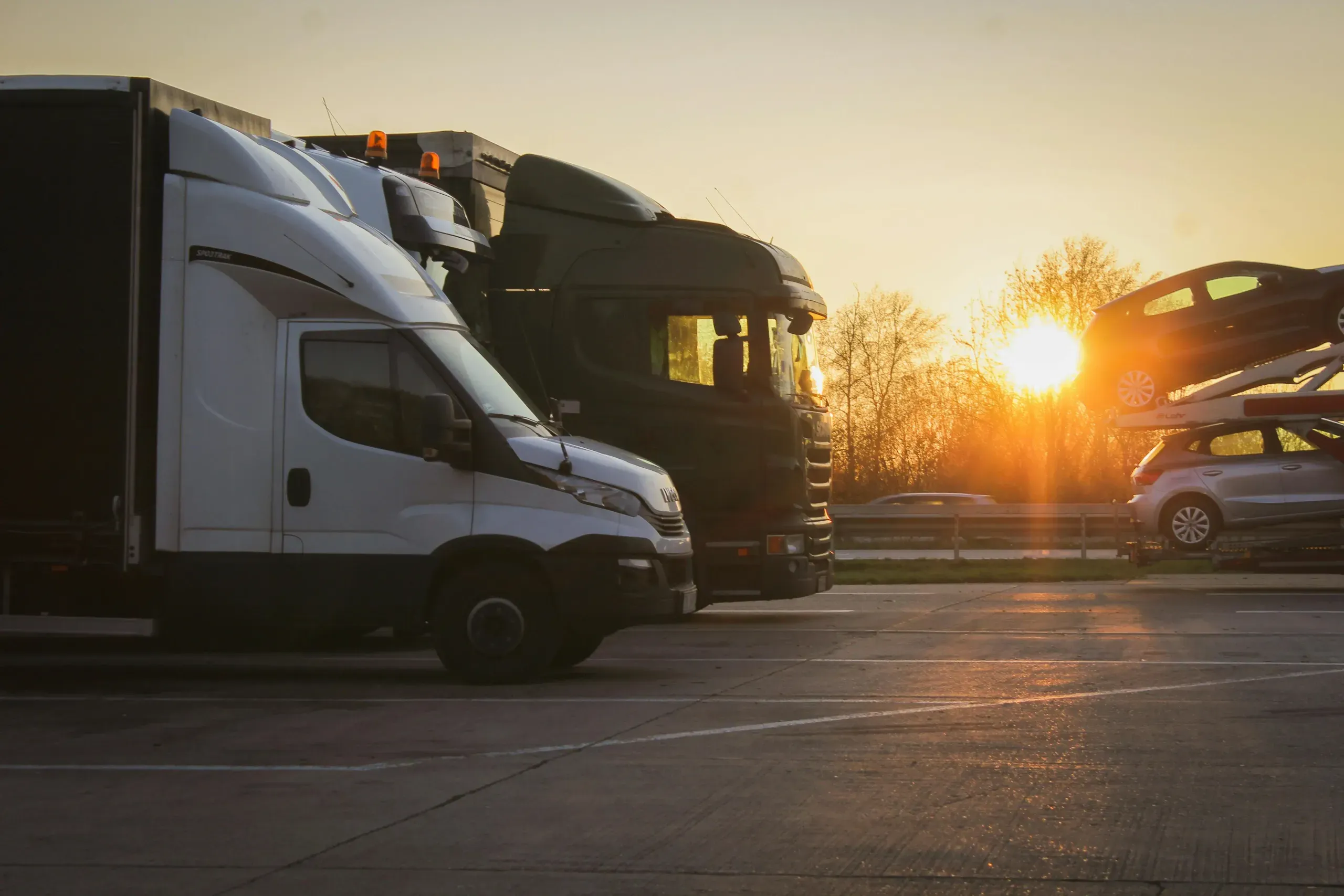
Ship Car from Kansas to Oklahoma
Shipping your vehicle from Kansas to Oklahoma covers a straightforward 357-mile route, typically taking 2 to 3 days for a carrier to complete the trip via I-135 and I-35. Because this corridor is well-traveled, moving your car between these states is efficient and reliable. On this page, we explain exactly how the transport process works, including what influences your total cost, how to prepare your vehicle for pickup, what to look for when verifying a carrier, and answers to common questions about moving your car across state lines.
- No-obligation quote within 2 minutes
- Price all-inclusive
- No charge until driver confirmed
- Distance
- 357 mi
- Transit time
- 2–3 days
- Open carrier from
- $600
How much does it cost to ship a car from Kansas to Oklahoma?
For a 357-mile trip between Kansas and Oklahoma, you can typically expect to pay between $600 and $800 for open transport, or $1,050 to $1,375 for enclosed shipping, with transit usually taking 2 to 3 days. As a referral service, Ship Car Pros connects you with independent carriers from our vetted network to handle the actual move. Your final price depends on several variables, including the specific pickup and delivery locations, the size and current operating condition of your vehicle, and your preferred pickup window. We will explore these factors in detail below to help you understand how to manage your costs. Whether you are moving a standard sedan or a specialty vehicle, we provide the tools to secure a reliable carrier at a fair market rate.
What factors affect car shipping cost?
Several variables influence your final rate beyond simple distance. Understanding how these factors stack helps you manage your budget when planning your shipment from Kansas to Oklahoma:
- Vehicle dimensions and weight: Larger trucks and SUVs occupy more trailer space and increase fuel consumption.
- Transport type: Enclosed trailers provide extra protection but carry a higher premium than standard open carriers.
- Pickup and delivery flexibility: A wider, 4-to-7-day window allows carriers to optimize their routes and often reduces your cost.
- Seasonal demand: High-traffic times like summer moving months can tighten capacity and push pricing upward.
- Route accessibility: Deliveries to major metro areas are typically more affordable than remote, rural locations off the main interstate.
- Vehicle operability: Inoperable cars require specialized loading equipment, which adds to the carrier's time and effort.
We account for these details to ensure your quote remains accurate and all-inclusive.
Open vs. enclosed car transport: which should you choose?
Choosing between open and enclosed transport depends largely on the value and specific needs of your vehicle. Open transport is the industry standard, accounting for the vast majority of shipments. It is the same method used to deliver new cars to dealerships. With a typical cost around $660, it is the most efficient and budget-friendly choice for reliable everyday drivers, trucks, and SUVs.
Enclosed transport, which averages around $1,155, provides a fully sealed environment that protects your vehicle from road debris, weather, and dust. This is the preferred option for high-value luxury cars, rare classics, or custom builds that require a pristine arrival. Because enclosed trailers are less common, they are best reserved for vehicles that truly need that extra layer of security. If your car is a standard daily driver, open transport offers the best balance of safety and value.
- Open carrier
- $600–$800
- Standard 7–10 car hauler.
- Enclosed carrier
- $1,050–$1,375
- Sealed trailer for high-value vehicles.
How long does it take to ship a car from Kansas to Oklahoma?
Typical transit time for your 357-mile journey from Kansas to Oklahoma is 2 to 3 days. While the drive itself only takes about 5 hours, carriers must balance their schedules with fuel stops, other vehicle pickups, and federal rest requirements that limit how many hours a driver can be on the road each day. Because of these factors, your vehicle won't arrive as quickly as a personal passenger car would. We will coordinate with your assigned carrier to give you a more precise arrival window once your load is confirmed. If you are working with a strict move-in date, let us know so we can plan accordingly.
Which routes do carriers usually take?
Carriers primarily rely on the I-135 S and I-35 S corridor to move vehicles from Kansas into Oklahoma. After departing the Wichita area, drivers head south on I-35, a major freight artery that offers a direct, efficient path across the state line. Because these interstates are well-maintained and designed for high-volume commercial traffic, they provide the most reliable transit for standard car haulers. While urban congestion can occasionally slow progress through the Wichita metro area, once carriers clear the city, the route remains relatively straightforward. Drivers avoid the more complex terrain of the state's western plains, keeping your vehicle on major highways for the entire journey.
What can delay your shipment?
While this corridor is a major freight artery, several factors can introduce variability to your delivery timeline. Winter weather is the primary challenge; intense wind gusts along the Kansas plains and ice storms on I-35 can force carriers to pause for safety, especially when KDOT or ODOT issue high-profile vehicle advisories. Additionally, scheduling can be affected by the timing of auction pickups, which require specific documentation like lot numbers and gate pins to be ready before a driver arrives. Finally, since carriers optimize routes to fill their trailers, weekend gaps and heavy peak-season demand can occasionally push your pickup or delivery date slightly beyond the initial estimate.
Popular Routes
Major city-to-city routes on the Kansas → Oklahoma corridor.
| From | To | Approx. distance | Transit |
|---|---|---|---|
| Wichita, KS | Oklahoma City, OK | ~150 mi | 2-4 days |
| Overland Park, KS | Tulsa, OK | ~200 mi | 2-4 days |
| Kansas City, KS | Norman, OK | ~300 mi | 2-4 days |
| Topeka, KS | Broken Arrow, OK | ~210 mi | 2-4 days |
| Olathe, KS | Smith Village, OK | ~280 mi | 2-4 days |
| Oaklawn-Sunview, KS | Edmond, OK | ~130 mi | 2-4 days |
| Lawrence, KS | Lawton, OK | ~350 mi | 2-4 days |
| Shawnee, KS | Moore, OK | ~290 mi | 2-4 days |
| Lenexa, KS | Midwest City, OK | ~280 mi | 2-4 days |
| Manhattan, KS | Enid, OK | ~200 mi | 2-4 days |
How does shipping a car from Kansas to Oklahoma work?
Shipping your vehicle from Kansas to Oklahoma follows a straightforward three-stage process: you request a quote, we coordinate the pickup, and the carrier handles the delivery. First, we secure an all-inclusive rate for your specific vehicle and route. Once confirmed, a driver arrives at your designated location to perform a thorough condition inspection and load your car. Finally, the carrier transports your vehicle across the state line via I-35, completing a second inspection upon arrival before handing over the keys. It is a simple, transparent workflow designed to get your car moved safely and efficiently.
What happens between booking and pickup?
Once you finalize your booking, the period leading up to the pickup is when we actively coordinate with our carrier network to get your car on the road. Here is what you can expect during this window:
- We post your specific shipment details to our private network, where vetted carriers review the route and load requirements.
- A qualified carrier accepts the job and is formally dispatched to your location.
- You receive a notification containing your carrier’s name, their MC number, and their contact information.
- The driver calls you directly to confirm a specific 1-to-3-day pickup window that aligns with their current route.
- On the scheduled day, the driver arrives at your designated address and walks the vehicle with you to complete the initial bill of lading inspection.
This sequence ensures you are fully prepared and connected with your driver well before they reach your driveway.
What is a bill of lading (BOL)?
The bill of lading (BOL) is both a contract for transport and a detailed condition report for your vehicle. At pickup, the driver performs a thorough, 21-point visual inspection, documenting any existing scratches, dents, or paint issues on this form. You will sign this document to confirm the car's condition before it leaves your possession. Upon delivery, the driver repeats this inspection. It is vital that you examine your vehicle carefully in good light before signing the final document. The comparison between these two reports serves as your primary protection, ensuring any new damage is clearly accounted for and addressed through the carrier’s insurance policy.
After delivery: registration and inspection in Oklahoma
Once your vehicle arrives in Oklahoma, you have 30 days to title and register it after establishing residency. You must visit a Service Oklahoma location or an authorized Licensed Operator in person, as initial out-of-state title transfers cannot be completed online or by mail. Be prepared to present your current out-of-state title, a valid driver’s license, and proof of Oklahoma insurance. You will also need to complete a physical VIN inspection on-site, which costs $4.00. While Oklahoma does not require safety or emissions testing, be aware that late registration triggers a $1.00 daily penalty starting on the 31st day. For a complete list of forms and detailed guidance, consult the official Service Oklahoma documentation.
Before you fully settle in, remember to handle your Kansas administrative requirements. You should notify your insurer of your move and, if you wish to claim a prorated refund on your Kansas registration fees, return your Kansas license plates and paperwork to your local County Treasurer.
How do you verify a car transport company is legitimate?
Legitimacy in the auto transport industry comes down to public records and transparent business practices. Every professional carrier must be registered with the Federal Motor Carrier Safety Administration (FMCSA). When vetting a provider, the first step is to request their Motor Carrier (MC) and Department of Transportation (DOT) numbers. You can plug these identifiers into the FMCSA Company Snapshot tool to confirm they have an active operating authority and valid insurance. If a company cannot provide these numbers or refuses to share them, do not proceed.
Beyond federal registration, look for a clear, written agreement that outlines the terms of your shipment. A reputable referral service or carrier will never ask for payment before a driver is actually assigned to your load. If a company insists on a full upfront payment or a large "booking fee" before they have confirmed a truck, consider it a significant red flag.
Finally, leverage third-party verification. Check platforms like the Better Business Bureau or Transport Reviews to see how the company handles customer concerns and whether they have a history of reliable service. These sites provide a window into real-world experiences, helping you distinguish between a professional operation and an entity that lacks a track record of accountability. When in doubt, prioritize companies that communicate clearly and follow these standard, verifiable procedures.
How do I prepare my car for shipping?
Preparing your vehicle for pickup ensures a smooth inspection and helps the driver load your car efficiently. Follow these steps before the carrier arrives to protect your property and keep the process on schedule:
- Wash the exterior: Cleaning your car makes it easier for you and the driver to accurately document existing scratches or dents during the initial inspection.
- Photograph the vehicle: Take clear, dated photos from all four sides, including the roof and interior, to provide a visual record of its condition before it is loaded.
- Remove personal items: Clear out all loose belongings, including toll tags, parking passes, and garage door openers, as carrier insurance typically does not cover items left inside.
- Limit fuel: Leave no more than a quarter-tank of gas to reduce the vehicle's weight and minimize safety risks during transit.
- Disable alarms: Turn off any security systems and provide the driver with a complete set of keys for the ignition and trunk.
- Note quirks: Inform the driver of any specific mechanical issues, such as a weak battery or a known fluid leak, so they can handle the vehicle with care.
Taking these simple precautions ensures your vehicle is ready for the road and helps avoid any confusion during the final inspection at your destination.
Specialty shipments from Kansas to Oklahoma
Shipping specialty vehicles requires extra coordination to ensure your asset is handled with the proper care and equipment. Whether you are dealing with a non-running classic, a recent auction purchase, or a multi-vehicle relocation, specific logistical steps are necessary to get your shipment to its destination safely. We handle each of these unique scenarios by matching your specific requirements with the right carriers from our network, ensuring that every detail is accounted for before the truck arrives.
How do you ship a car bought at Copart or IAA auction?
Shipping a vehicle purchased from an auction house like Copart or IAA requires more coordination than a standard residential pickup. Because these facilities operate on strict appointment schedules and security protocols, the carrier needs specific information to gain access to your vehicle. Before we can dispatch a driver, you must provide the lot number, the gate pin, and your buyer number. Additionally, the auction house must have confirmed full payment for the vehicle; if the lot is not "released" in their system, the driver will be turned away at the gate.
These requirements often add 1 to 3 days to your timeline compared to a standard pickup. Auction facilities are high-traffic hubs, and carriers must align their arrival with the facility's specific loading windows. Ensuring all your documentation is accurate and the vehicle is fully cleared for release prevents unnecessary delays.
How do you ship an inoperable car?
If your vehicle doesn't run, we can still get it moved, but it requires specialized equipment. Unlike operable cars that drive onto the trailer, an inoperable vehicle must be loaded using a winch to pull it safely onto the flatbed. For this to work, your car must still roll, steer, and have functioning brakes. If the wheels are locked or the steering is seized, standard transport methods won't apply. Because this process takes more time and requires specific gear, it adds to the standard rate of your shipment. Be sure to let us know about the vehicle’s condition upfront so we can dispatch a driver equipped with a winch.
How do you ship multiple cars at once?
Shipping two or more vehicles simultaneously is an effective way to streamline your logistics and reduce costs. Whether you are relocating a household with multiple drivers, managing a dealer transfer, or moving a classic car collection, bundling your vehicles onto a single carrier often qualifies you for a multi-vehicle discount. Because the carrier saves on loading time and fuel by visiting one pickup location rather than several, the per-vehicle rate typically drops compared to shipping each car independently. We coordinate with our network to ensure your vehicles remain together on the same trailer for the entire journey, providing a consistent, efficient, and centralized transport experience from Kansas to Oklahoma.
Is it cheaper to ship a car or drive it from Kansas to Oklahoma?
Deciding whether to ship your car or drive it yourself comes down to comparing the upfront cost against the value of your time and effort. A 357-mile trip from Kansas to Oklahoma is a relatively short haul, typically taking about 5 hours and 15 minutes of non-stop driving.
If you choose to drive, your primary expense is the per-mile cost of operating your vehicle. Based on current AAA data, you can expect to spend approximately $250 covering fuel, maintenance, and wear-and-tear for a trip of this length. Because the distance is manageable in a single day, you likely won't need to factor in the cost of a hotel stay.
In comparison, shipping your vehicle via an open trailer typically costs around $660. While shipping is the more expensive option on paper, it eliminates the physical fatigue of a five-hour drive and saves you a full day of travel. When you factor in the opportunity cost of taking time off work, the stress of navigating highway traffic, and the logistical coordination required for a solo road trip, the choice becomes more personal. Driving is the most cost-effective path if you are comfortable behind the wheel, while shipping offers a convenient, hands-off alternative that allows you to arrive at your destination refreshed and ready to go.
| Ship it | Drive it | |
|---|---|---|
| Total cost | $600–$800 all-in | ~$370 (fuel + lodging + meals) |
| Your time | 0 hours | ~6 hrs driving + overnight |
| Wear & tear | None | 357 mi added; ~$0.10/mi depreciation |
| Risk | Insured in transit | Personal liability + fatigue |
For most Kansas → Oklahoma shipments, ship is the better value once time and depreciation are counted.
Frequently asked questions
How much does it cost to ship a car from Kansas to Oklahoma?
Shipping a vehicle from Kansas to Oklahoma typically costs between $600 and $800 for open transport, while enclosed transport usually ranges from $1,050 to $1,375. Your final rate depends on specific pickup and delivery locations, your vehicle's size and operability, and your preferred pickup window. These figures are all-inclusive, covering fuel, tolls, and driver fees, with no surprise charges added to the total once your quote is finalized.
How long does it take to ship a car from Kansas to Oklahoma?
Transit time for the 357-mile journey between Kansas and Oklahoma typically takes 2 to 3 days. Although the drive itself covers about 5 hours and 15 minutes of travel time, carriers must adhere to federal hours-of-service regulations and manage additional pickups or deliveries along their route. While we provide an estimated arrival window once your carrier is assigned, actual delivery times can vary based on weather, traffic, and individual carrier schedules.
What is the difference between open and enclosed transport for my car?
Open transport is the industry standard, where your vehicle rides on an exposed trailer, offering the most budget-friendly and efficient option for daily drivers. In contrast, enclosed transport utilizes a fully sealed trailer to protect your vehicle from weather, road debris, and dust. Because enclosed trailers are scarcer and provide a higher level of protection, they typically cost 1.6 to 1.8 times more than open transport and are best suited for classic, luxury, or high-value vehicles.
When do I pay for my car shipment?
You pay for your shipment in two stages. A partial deposit is charged to your credit card only after a carrier has been officially confirmed and dispatched to your location. The remaining balance for the transport is paid directly to the carrier at the time of delivery. Drivers typically accept payment via cash, certified check, money order, Zelle, or Venmo, though you should confirm the driver's preferred method when they reach out to coordinate your delivery.
Is my vehicle insured during transport from Kansas to Oklahoma?
Yes, all legitimate carriers are required to carry cargo insurance that covers your vehicle while it is in transit. This coverage is typically all-inclusive and protects your car from bumper to bumper during the entire journey. When you book, you are connected with a carrier whose insurance policy is verified, ensuring your asset is protected against damage throughout the transport process from Kansas to Oklahoma.
Do I need to be present for the vehicle inspection at pickup and delivery?
You do not need to be physically present to hand off or receive your vehicle. If you cannot be there, you can authorize a family member, friend, or dealership representative to act on your behalf. As long as the authorized contact has the keys and is prepared to sign the bill of lading after completing the inspection with the driver, the process will proceed without any issues.
What is a bill of lading and why does it matter for my car transport?
The bill of lading is a critical legal document that serves as both your transport contract and the official condition report for your vehicle. During the inspection at pickup and delivery, the driver documents the car’s condition, including existing scratches or dents. This report is your primary protection; by comparing the pickup and delivery inspections, you can easily verify that the vehicle arrived in the same condition as when it was loaded.
How do multi-broker postings affect my shipping price?
Listing your shipment with multiple brokers simultaneously can inadvertently inflate your costs. When the same vehicle appears on the national loading board multiple times, carriers may perceive the load as difficult to fulfill or assume there is a bidding war, which can drive up the price. To avoid this, it is best to work with one provider who can coordinate directly with their network to secure a reliable carrier at a fair market rate.